Comenzi Telefonice : 0723.333.505 | 0268.418.667
Cerca
Generic filters
Exact matches only
Filter by Custom Post Type

No products in the cart.

Menu
Esaurito
  • Minerale trasoare coloidale organice cu acid fulvic
  • Minerale trasoare coloidale organice cu acid fulvic

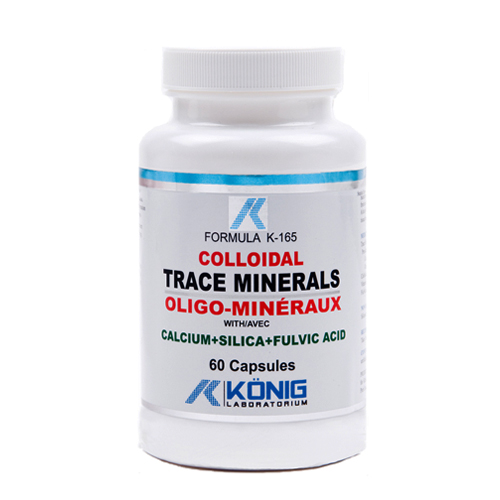
COLLOIDAL TRACE MINERALS – COMPLESSO DI MINERALI COLLOIDALI

0 reviews
0 out of 5

25,00 €

Esaurito

Doriti sa plasati comanda telefonic?
Luni - Duminica: 08:00 – 21:00
0268.418.667 0723.333.505

Descrizione

A differenza dei tradizionali minerali inorganici, i minerali colloidali sono molto piccoli e si trovano in sospensione e vengono estratti da fonti biologiche, tipo i Chelatati, in modo naturale.     I minerali inorganici vengono assorbiti dal corpo solo in una proporzione minima del 10%.      

Per le loro dimensioni molecolari, i Chelatati vengono assorbiti al 100%.   Il complesso di minerali colloidali di Konig sono anche ricchi di elettroliti e acido fulvico.    Il Silice è un minerale essenziale per la formazione del tessuto connettivo e l’aggiunta di Calcio Corallo apporta un contributo in più di elettroliti.       Gli Elettroliti sono necessari per facilitare il trasporto di minerali nel sangue.   Gli effetti benefici dell’acido fulvico sono una delle più recenti scoperte scientifiche e sono stati definiti   “Un vero miracolo”   


Composizione

Complesso minerale  dalla barriera corallina:  250 mg

Contenente:
*    Calcio:  80 mg
*    Sali contenenti Oligominerali:  170 mg
*    Silice colloidale:  100 mg
*    Acido fulvico (organico):  5 mg
*    Vitamina C:  10 mg

Non contiene:  Latte, Uova, Glutine, Grano, Mais, Noci, Sapori e colori artificiali.

Somministrazione

1 – 2  Capsule al giorno.  

Non superare il consumo giornaliero raccomandato.

AVVERTENZE: Gli integratori non vanno intesi come sostituti di una dieta sana ed equilibrata e di uno stile di vita sano.    Essendo sostanze naturali e non medicinali, forniscono dei benefici all’organismo e possono ridurre il rischio di alcune malattie.     I nostri integratori, proprio per il loro stretto controllo e per la loro natura, possono essere assunti senza prescrizione medica, ma Provita consiglia sempre di non superare le dosi prescritte, non utilizzare in gravidanza, allattamento, nei bambini al disotto dei 12 anni, nei casi di patologie renali e di consultarsi con un medico e/o farsi seguire da una persona altamente qualificata ( es. Dietologo, Nutrizionista, Medico sportivo, ecc. ) a seconda del tipo di obiettivo che si vuole raggiungere.    Tenere lontano dalla portata dei bambini al disotto dei 3 anni.     Non superare la dose giornaliera consigliata.      Conservare a temperatura inferiore ai 30° C e al riparo dall’umidità, evitare l’esposizione a fonti di calore localizzate ed ai raggi solari.     La data di scadenza si riferisce al prodotto correttamente conservato e in confezione integra.    Tutte le informazioni presentate su questo sito danno un’informativa generale e non sostituiscono la consulenza del medico e/o del farmacista.

Referenze

  1. Senesi, N (1990). Analytica Chimica Acts, 232, 51-75.  Amsterdam, The Netherlands: Elsevier
  2. Vital electrolytes-Baker, W.E. (1973) Geochimlen at Casmochtulon Acts, 37, 269-281.
  3. Gamble, D. S. and Schnitzer, M. (1974) Trace Metals and Metal-Organic Interactions in Natural Waters.  Ann Arbor MI: Ann Arbor Science.
  4. Power of an electrolyte – Crile, G. (1926). A bipolar theory of living processes.  New York: McMillen.
  5. Decrease in electrical potential – Crile, G. (1926) A bipolar theory of living processes. New York: McMillen.
  6. Powerful electrolyte – Jackson, William R. (1993).  Humic, Fulvic and Microbial Balance:  Organic Soil Conditioning.  Evergreen Colorado: Jackson Research Center.
  7. New Electronic Encyclopedia.  (1991).  Photosynthesis.  Grolier electronic publishing.
  8. Donor and acceptor – Jackson, William R. (1993).  Humic, Fulvic and Microbial Balance:  Organic Soil Conditioning.  Evergreen Colorado: Jackson Research Center.
  9. Donor and receptor – Rashid, M.A. (1985). Geochemistry of marine humic substances.  New York: Springer-Verlag.
  10. Donor, receptor-Sposito, G., Holtaclaw, K.M.,LeVesque C.S., and Johnston, C.T. (1982).  Trace metal chemistry in arid-zone filed soils ameneded with sewage sludge.  II. Comparative study of the fulvic and fraction.  Soil Science Society America Journal, 45, 265-270.
  11. Mineral complexes in fulvic may serve as electrodes- Rashid, M.A. (1985).  Geochemistry of marine humic substances. New York: Springer-Verlag.
  12. Free radical – Senesi, N. (1990) Analytion Chimica Acts, 232, 51-75. Amsterdam, The Netherlands: Elsevier.
  13. Free radical – Senesi, N., Chen, Y., Schnitzer, M. (1977b).  The role of humic acids in extra-cellular transport and chemical determination of pH in natural waters.  Soil Biology and Biochemistry, 9, 397-403.
  14. Oxidation reduction – Senesi, N., Chen, Y., Schnitzer, M. (1977b).  The role of humic acids in extra-cellular transport and chemical determination of pH in natural waters.  Soil Biology and Biochemistry, 9, 397-403.
  15. Dissolves metals and minerals – Ong, H.L., Swanson, V.D., Bisque, R.E. (1970) Natural organic acids as agents of chemical weathering (130-170).  U.S. Geological Survey Professional Paper 700 C. Washington, D.C.  U.S. Geological Survey.
  16. Enhance and transport nutrients – Christman, R.F., Gjessing, E.T. (1983). Aquatic and terrestrial humic materials.  The Butterworth Grove, Kent, England: Ann ArborScience. Also: Prakish, A. (1971). Terrigenous organic matter and coastal phytoplankton fertility.  In J.D. Costlow (Ed.), Fertility of the sea, 2, 351-368. (Proceedings of an International Symposium on Fertility of the Sea, Seo Paulo, Brazil, London, and New York: Fordon and Breach Science)
  17. Enhance and transport nutrients – Prakash, A. (1971). Fertility of the Sea, 2 351-368.
  18. Williams, S.T. (1963). Are antibiotics produced in soil?  Pedobiologia, 23, 426,435.
  19. Stimulate growth – Kanonova, M.M. (1966).  Soil organic matter. Elmsford, N.Y.: Pergamon.
  20. All known vitamins in soil – Kanonova, M.M. (1966). Soil organic matter. Elmsford, N.Y.: Pergamon.
  21. Many times its weight – Deb, B.C. (1949).  The movement and precipitation of iron oxides in podzol soils.  Journal of Soil Sciences, 1, 112-122.
  22. Catalyzes enzyme reactions – Khristeva, L.A., Luk Yaneko, M.V. (1962).  Role of physiologically active substances in soil-humic acids, bitumens and vitamins B,C,P-PA and D in the life of plants and their replenishment.  Soviet Soil Sciences, 10,1137-1141.
  23. Fulvic and enzymes – Pardoe, H.L., Townshend, A., Clerc, J.T., VenderLinden (Eds.) (1990, May1).  Analytica Chimica Acts, Special Issue, Humic and Fulvic Compounds, 232(1), 1-235.  Amsterdam, The Netherlands: Elsevier Science Publishers.
  24. Increase assimilation – Buffle, J. (1988).  Complexation Reactions in Aquatic Systems:  An Analytical Approach.  Chickester: Horwood.
  25. Low molecular weight, Aiken, G.R., McKnight, D.M. VacCarthy, P. (1985).  Humic substances of soil, sediment and water, New York: Wiley-Interscience.
  26. Sensitize cell membranes – Rahid, M.A. (1985) Geochemistry of Marine Humic Substances.  New York: Springer-Verlag.
  27. Stimulate metabolism – Rahid, M.A. (1985) Geochemistry of Marine Humic Substances.  New York: Springer-Verlag.
  28. Genetic and growth – Jackson, William R. (1993). Humic, Fulvic and Microbial Balance:  Organic Soil Conditioning, 538.  Evergreen Colorado: Jackson Research Center.
  29. Oxygen is absorbed – Kononova, M.M. (1966).  Soil organic matter. Elmsford, NY: Pergamon.
  30. Rapid transport to shoots-Kanonova, M.M. (1966)  Soil organic matter. Elmsford, NY: Pergamon
  31. Immune system- -Syltie, P.W. (1985).  Effects of very small amounts of highly active biological substances on plant growth.  Biological Agriculture and Horticultures, 2,245-269, and research reports and studies, Appropriate Technology Ltd.  Dallas, TX: Murray Sinks II of ATL (publisher)
  32. Modify damage by toxic compounds – Christman, R.F., Gjessing, E.T. (1983).  Aquatic and terrestrial humic organic matter and coastal phytoplankton fertility.  In J.D. Costlow (Ed), Fertility of the sea, 2,351-368.  (Proceedings of an International Symposium on Fertility of the Sea, Seo Paulo, Brazil, London, and New York: Gordon and Breach Science)
  33. Environmental Chemicals
  34. Paraquat – Fischer, A.M., Winterie, J.S., Mill, T.  (1967).  Primary photochemical processes in photolysis medicated by humic substances.  In R.G. Zika, W.J. Cooper (Eds).  Photochemistry of environmental aquatic system (141-156).  (ACS Symposium Series 327). Washington D.C.:  American Chemical Society.
  35. Pesticides – Aiken, G.R. McKnight, D.M. MacCarthy, P. (1985).  Humic substances of soil, sediment and water.  New York: Wiley-Interscience.
  36. Radioactive properties – Szalay, A. (1958).  The significance of humus in the geochemical enrichment of uranium.  Proceedings of the 2nd International Conference on the Peaceful Uses of Atomic Energy, 2, 182-186.  (London: Pergamon)
  37. Dissolves and weathers silica – Huang, W.H., Delier, W.D. (1970).  Dissolution of rock-forming silicate minerals in organic acids; simulated first stage weathering of fresh minerals surfaces.  America Mineralogical Journal, 55,2076-2097.
  38. Dissloves silica – Kodmans, H., Schnitzer, M., Jaakkimainen, M. (1983).  Chlorite and biotite weathering by fulvic acid solutions in closed and open systems.  Canadian Journal of Soil Science, 63, 619-629.
  39. Transmutate of synthesis of new minerals – Schnitzer, M., Dodama, H. (1977).  Reactions of minerals with soil humic substances.  In J.B. Dixon, S.B. Weed (Eds), Minerals in soil environments (Chap. 21).  Madison, WI: Soil Science Society of America.
  40. See “The Fulvic Acid, Vegetal Silica Miracle” later in this report, and further documentation of Kervran, Lois C., Biological Transmutations.
  41. Cell elongation -Poapst, P.A., Schnitzer, M. (1971).  Fulvic acid and adventitious root formation.  Soil Biology and Biochemistry, 3, 215-219.
  42. Enhance permeability of cell membranes – Christman, R.F. Gjessing, E.T. (1983).  Aquatic and terrestrial humic materials.  The Butterworth Grove, Kent, England: Ann Arbor Science.  Also: Prakash, A. (1971).  Terrigenous organic matter and coastal phytoplankton fertility.  In J.D. Costlow (Ed), Fertility of the sea, 2, 351-368. (Proceedings of an International Symposium on Fertility of the Sea, Seo Paulo, Brazil, London, and New York: Gordon and Breach Science) low molecular weight, Aiken, G.R. McKnight, D.M. MacCarthy, P. (1985).  Humic substances of soil, sediment and water.  New York: Wiley-Interscience.
  43. Sensitizing agent – Prakash, A. (1971).  Terrigenous organic matter and coastal phytoplankton fertility.  In J.D. Costlow (Ed), Fertility of the sea, 2, 351-368. (Proceedings of an International Symposium on Fertility of the Sea, Seo Paulo, Brazil, London, and New York: Gordon and Breach Science)
  44. Increase metabolism of proteins – Christman, R.F. Gjessing, E.T. (1983).  Aquatic and terrestrial humic materials.  The Butterworth Grove, Kent, England: Ann Arbor Science.  Also: Prakash, A. (1971).  Terrigenous organic matter and coastal phytoplankton fertility.  In J.D. Costlow (Ed), Fertility of the sea, 2, 351-368. (Proceedings of an International Symposium on Fertility of the Sea, Seo Paulo, Brazil, London, and New York: Gordon and Breach Science)
    Proteins, DNA, RNA – Khristeva, L.A., Solocha, K.L., Dynkins, R.L., Kovalenko, V.E., Gorovaya, A.I.  (1967).  Influence of physiologically active substances of soil humus and fertilizers on nucleic acid metabolism, plant growth and subsequent quality of the seeds.
  45. Humus at Plants, 4, 272-276.
  46. Proteins, DNA, RNA, Jackson, William R. (1993).  Humic, Fulvic and Microbial Balance:  Organic Soil Conditioning,569-570.  Evergreen Colorado: Jackson Research Center.
  47. Synthesis of RNA and DNA – Khristeva, L.A. (1968).  About the nature of physiologically active substances of the soil humus and of organic fertilizers and their agricultural importance.  In F.V. Hernando (Ed), Pontifica academec scientarium. citta del vaticano (701-721).  New York: John Wiley
  48. Catalyst to vitamins within the cell – Williams, Dr. Roger J. (1977).  The Wonderful World within You.  Bio-Communications Press.  Wichita, Kansas.
  49. Transport of metal ions – Schnitzer, M., Khan, S.U. (1972).  Humic substances in the environment.  New York: Dekker.

Potresti anche essere interessato a….

*I risultati possono variare da persona a persona; non è garantito ottenere i risultati riportati sul sito o quelli già ottenuti dalle persone che hanno inviato le loro testimonianze.